
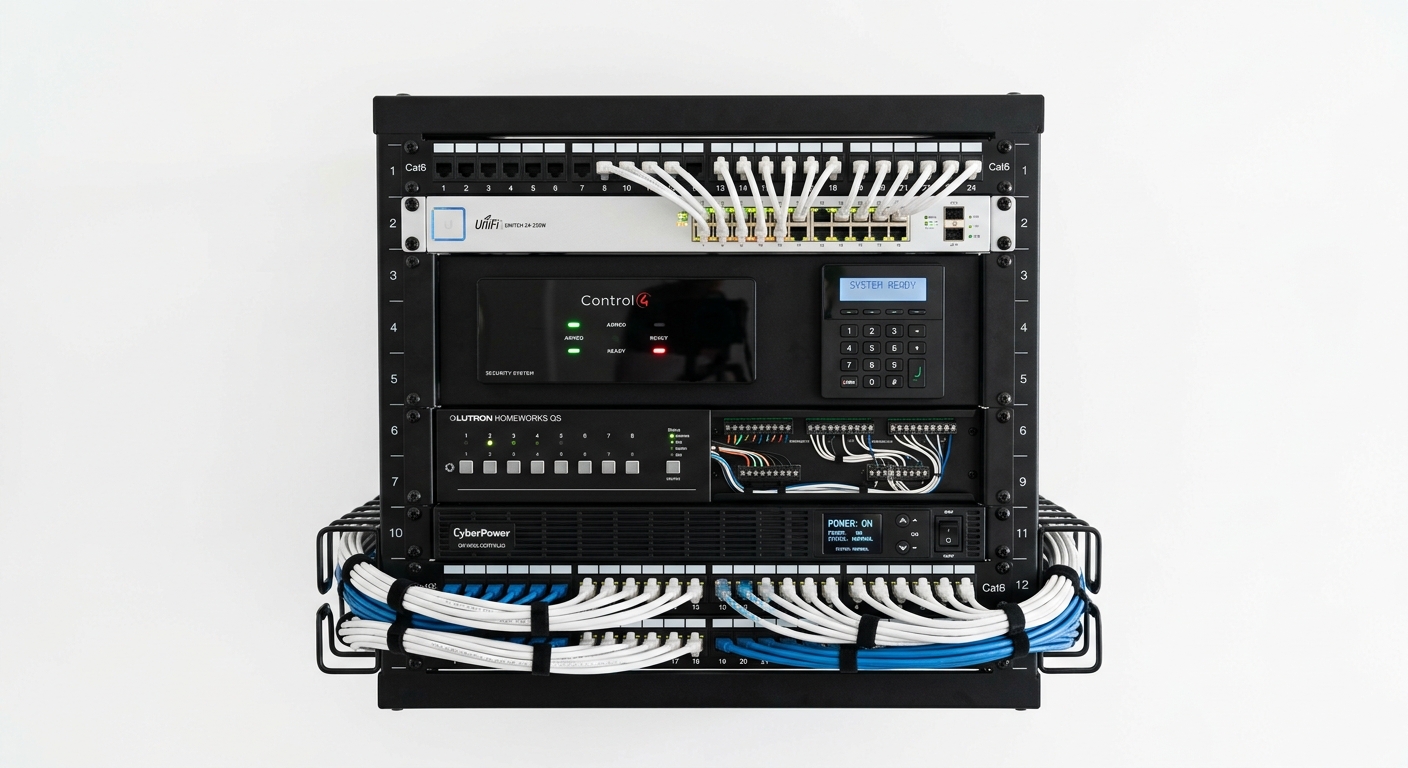
Security devices work fine standalone, but integrating them into a broader smart home platform unlocks automations and coordination that standalone apps simply can't provide on their own.
Automated Scenes Tied to Security Events
An integrated system can trigger broader home automations from a security event — an alarm triggering can automatically turn on all interior and exterior lights (both as a deterrent and to aid a returning homeowner or responding authorities), or a door unlocking via smart lock can automatically disarm the relevant alarm zone and adjust the thermostat as part of an "arriving home" scene.
Away and Vacation Scenes
An "Away" scene can arm the alarm, lock all doors, adjust the thermostat to an energy-saving setpoint, and — for homes with lighting control — run a randomized lighting schedule that makes an empty house look occupied, all from a single action rather than manually handling each system separately before leaving.
Camera Feeds Tied to Sensor Triggers
Rather than manually pulling up a specific camera after an alert, an integrated system can automatically surface the relevant camera feed the moment a specific sensor triggers — a side gate sensor pulling up the side-yard camera automatically, for instance, saving the step of searching through multiple camera feeds during an actual event.
Shade and Lighting Coordination for Privacy
Motorized shades and lighting can be coordinated with security scenes for privacy and deterrence — closing shades automatically when an "Away" scene activates, or ensuring exterior lighting turns on with any nighttime motion detection near entry points.
Single Interface, Not Five Apps
Perhaps the most practical benefit of integration is simply not needing separate apps for cameras, alarm, locks, and lighting — a unified interface (app, keypad, or touch panel) that shows security status alongside everything else reduces the friction of actually checking and using the system regularly, which matters more for ongoing usability than any individual automation.
What to Discuss With an Integrator
If you're adding security to an existing smart home platform (or planning both together), confirm your camera, alarm, and lock brands have native integration support with your chosen platform — mismatched or unsupported brands sometimes require workaround integrations that are less reliable than native support.
The Bottom Line
Standalone security devices provide real protection on their own. Integrated into a smart home platform, they become part of coordinated scenes — Away, Arriving Home, Night — that reduce daily friction and add automation that no single security app alone can replicate.